
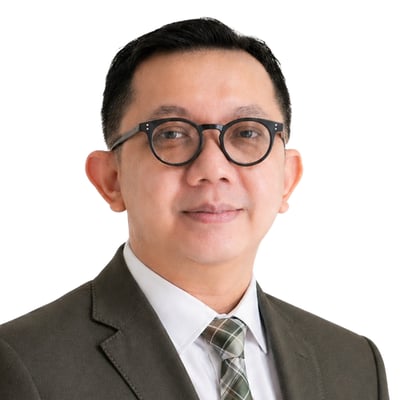
Aries Setiadi
Sr. Principal FSP & Policy Advocacy
Women's World Banking
Aries Setiadi is the Senior Principal FSP & Policy Advocacy at Women’s World Banking. He brings over 17 years of experience working across government, financial sector policymaking, and the financial technology industry.
Aries previously served as Executive Director at the Indonesia FinTech Association (AFTECH), where he led evidence-based policy advocacy with financial regulators and coordinated financial inclusion and financial literacy initiatives in partnership with academic institutions, international organizations, and civil society organizations. Earlier in his career, Aries spent more than a decade at Indonesia’s Ministry of Finance, where he worked on financial system stability, fiscal policy, and budget formulation. He coordinated cross-agency financial stability assessments, contributed to national economic recovery policies, and delivered macroeconomic and policy analysis.
Aries holds a Master of Public Administration from Columbia University’s School of International and Public Affairs (SIPA).
Speaking at the summit
-
10:30–11:10amSun 15 NovForum StageOpen
Phsar - Finance That Reaches People
Beyond Access: Turning Digital Finance into Financial Resilience
About this session
Opening an account is not the same as becoming financially secure. A household can have digital payments and still be one illness, failed harvest or income shock away from expensive debt. The next test for financial inclusion is therefore not simply whether people enter the financial system, but whether the system helps them withstand disruption and recover. Digital payment histories can support savings, credit and insurance for people with little formal financial history, while partnerships between banks, microfinance institutions and fintechs can extend services beyond traditional customer bases. The panel examines what resilience looks like in practice and which products, data models and partnerships measurably improve financial security for informal workers, women and small businesses.
-
3:30–5:00pmSun 15 NovRoundtableOpen
Phsar - Finance That Reaches People
The missing majority: Designing Finance for informal Economies
About this session
Much of the world's workforce earns outside formal payroll systems. Income can arrive daily, seasonally or irregularly, while many savings, credit, pension and insurance products still assume a stable monthly salary. Informal workers are therefore not a marginal customer segment; in many emerging markets they are the economy's centre of gravity. Digital payments and alternative data have made it possible to build financial histories for people previously invisible to formal institutions, but access alone does not guarantee trust or sustained use. The roundtable compares products and distribution models designed around irregular income and asks what makes an informal worker continue using a formal financial product after the first transaction.

