
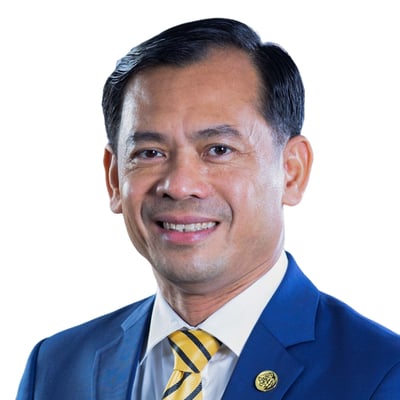
Rath Sophoan
Chairman / CEO & Country Head
The Association of Banks in Cambodia / Maybank (Cambodia) Plc
Mr. Rath Sophoan
Chief Executive Officer & Country Head, Maybank Cambodia
Chairman, Association of Banks in Cambodia (ABC)
With more than 30 years of professional experience, including over two decades in senior banking leadership with the leading regional banks, he has led business initiatives (new business set-up, growth acceleration and transformation) across consumer banking, business banking, operations, technology, and digital innovation. Currently serves as Chief Executive Officer and Country Head of Maybank Cambodia, a wholly owned subsidiary of Maybank Bank Group, the largest company in Malaysia and one of the top 4 regional banks in ASEAN.
He also serves as Chairman of the Association of Banks in Cambodia (ABC), a Board Director of the ASEAN Bankers Association (ABA), the Institute of Banking and Finance (IBF) Cambodia, and Credit Bureau Cambodia Holding (CBHC) and is widely recognized for contributing to the development of banking industry, fair and responsible market conduct, the banking profession and regional financial sector cooperation and connectivity.
The holder of Master of Laws from the National University of Singapore (Asean Fellow), INSEAD Executive Leadership Program, Fontainebleau, France, Mr. Sophoan is a Chartered Banker, Accredited Director, and member of the Singapore Institute of Directors (SID). A well- regarded banker and leader with strong commitment to responsible banking, industry collaboration, financial inclusion and sustainable economic development, Mr. Sophoan is a frequent speaker on leadership, financial sector resilience, governance, sustainability, digital and payment transformation.
Speaking at the summit
-
1:30–3:00pmMon 16 NovRoundtableRoundtable 1Open
Bakong - Sovereign Rails
Who Owns the Rails? Governance, Access and the Economics of Shared Infrastructure
About this session
Shared payment infrastructure creates value precisely because competitors use the same network, but that makes ownership and funding contentious. Banks may resist paying for infrastructure used by newer competitors. Fintechs may resist access terms controlled by incumbents. Governments may finance the network and still face pressure over unequal access or rising operating costs. Different markets have taken different approaches, including central-bank ownership, industry-owned switches and open-source infrastructure. The roundtable compares these models through three questions: who owns the rail, who gets access and on what terms, and who pays to maintain and upgrade it. It then examines how those choices change once infrastructure crosses borders and sovereignty becomes shared rather than purely national.

