

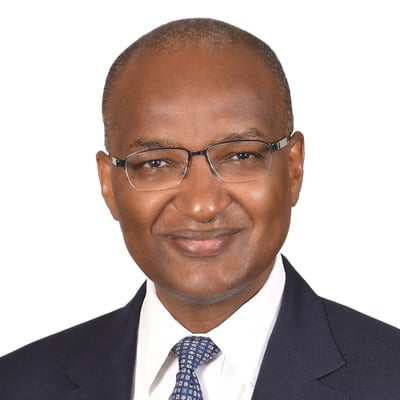
Dr. Patrick Njoroge
Former Governor
Central Bank of Kenya
Dr. Patrick Njoroge served as the ninth Governor of the Central Bank of Kenya from June 2015 to June 2023, after a 20-year career at the International Monetary Fund. He is currently a member of the Advisory Boards of the "Yale Program on Financial Stability" and the "Global Finance and Technology Network," chair of the "Africa Financial Industry Summit" (AFIS) Supervisory Council, and a member of the Africa Expert Panel for South Africa’s G20 Presidency. He has received several awards and recognitions, including four awards for Africa’s Central Banker of the Year, and recognition in 2023 as a Top 25 African Finance Leader. He holds a PhD in Economics from Yale University. He is MLK, Jr. and Phyllis Wallace Visiting Scholar at MIT Sloan School of Management.
Speaking at the summit
-
11:10–11:50amSun 15 NovForum StageOpen
Bakong - Sovereign Rails
Building the Rails: Designing the Foundation for Financial Innovation (Governors' Panel)
About this session
The first choices made in a national payment system are difficult to reverse. Who owns the switch, who governs access, how fees are set and who pays for upgrades can determine the market that develops on top of it. Publicly funded rails can widen access but leave the state carrying long-term costs. Commercial models can create stronger incentives to invest while making access harder for smaller providers. Bakong offers one model: a national network connecting banks and e-wallets through shared infrastructure and interoperable QR payments. The panel compares the ownership, governance and funding choices available to emerging markets and asks which capabilities must remain under national control, which can be shared with industry, and what makes an open payment network financially sustainable.
-
11:25am–12:10pmMon 16 NovForum StageOpen
Chamkar - The Proving Ground
A Different Financial Future: What Emerging Markets Can Shape, Share and Scale
About this session
If emerging markets can build stronger domestic financial infrastructure, connect it across borders and reduce unnecessary dependence on external intermediaries, the impact goes far beyond payments. It changes how trade is settled, how capital moves, how small businesses reach markets, how governments exercise monetary and regulatory authority, and how regions relate economically to one another. The closing plenary steps back from the architecture itself to examine what this shift could mean at scale. It asks where greater financial autonomy could materially change economic outcomes, which forms of regional cooperation could create the greatest shared value, and what new risks or concentrations of power could emerge alongside that progress. The discussion looks ahead to the financial system these choices could produce over the next decade, and what role emerging markets can play in shaping it rather than simply adapting to it.

