
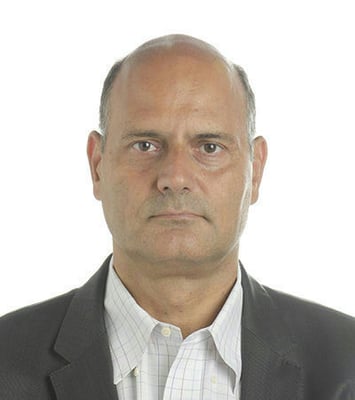
Dr. Luca Antonio Ricci
Assistant Director, Division Chief & Head of SSA Digital Payment
International Monetary Fund
Luca Antonio Ricci is an Assistant Director, Division Chief, and Mission Chief at the International Monetary Fund, and a Research Fellow at the Centre for Economic Policy Research. He leads the IMF African Department Regional Studies Division and the IMF African Department Working Group on CBDC and Digital Payments, which issued a Departmental Paper, organized a survey of the Sub-Saharan Africa (SSA) Central Banks (CBs), and created a network of the SSA CBs on these issues. He is also Mission Chief for the West African Economic and Monetary Union (WAEMU). He previously was Mission Chief for the Ivory Coast, Chile (negotiating the $24bn Flexible Credit Line), Ecuador Panama, and Oman. He held positions in the IMF’s Research Department, publishing over 40 papers in refereed journals on exchange rates, international finance, external debt, growth, inflation, macroeconomic insurance, social unrest, trade, and firms’ location choices. In 2010 he spent one year at Barclays Capital, as Managing Director and Head of International Economics. Prior to joining the IMF, he was a Visiting Fellow at Harvard University and a Researcher at the University of Konstanz. Mr. Ricci received a Ph.D. and an M.A. in Economics from The Graduate Institute of International Studies in Geneva, and a B.A. in Economics from the University of Rome “La Sapienza”, summa cum laude.
Speaking at the summit
-
11:50am–12:30pmSun 15 NovForum StageOpenModerator
Baray - Monetary Sovereignty
The Currency Question: Monetary Sovereignty in a Digital Age
About this session
As digital payments, stablecoins and instant cross-border transactions reshape global finance, a fundamental question is emerging: who controls the currencies, infrastructure and rules through which economies transact?
Across Africa and Asia, including ASEAN, governments and financial institutions are navigating the tension between greater financial connectivity and preserving monetary sovereignty. From Cambodia's de-dollarisation efforts to Africa's expanding digital payment ecosystems and regional settlement ambitions, new payment infrastructure is challenging traditional currency dependencies while creating new forms of financial interdependence.
This panel examines whether digital financial integration can strengthen monetary sovereignty, reshape cross-border trade and rebalance economic power or whether the future of money will remain defined by dominant currencies, global platforms and market confidence. -
1:30–3:00pmSun 15 NovRoundtableOpenModerator
Baray - Monetary Sovereignty
Beyond the Dollar: Stablecoins, Local-Currency Settlement & the Future of Money
About this session
Most stablecoins in circulation are linked to the US dollar. For economies seeking to reduce their dependence on the dollar, that creates a fundamental contradiction: the same technology that can lower the cost of payments may also make dollar-denominated money easier to use. At the same time, local-currency settlement is advancing through bilateral arrangements, regional initiatives and domestic payment systems. The roundtable examines that tension directly. When do stablecoins solve a genuine user problem, and when do they reinforce existing monetary dependence? What would a credible local-currency digital instrument require in reserves, governance, redemption and supervision? And where does local-currency settlement provide a better answer than creating another form of digital money?

