
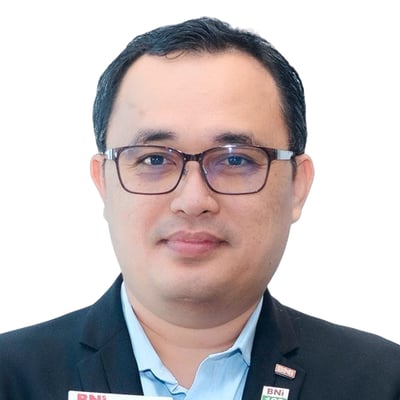
Kao Sereyrath
Chief Executive Officer
VCONNECT
r. KAO Sereyrath, CEO of VCONNECT Cambodia, leads several tech companies, including VBANX, ERPOne, ActiveCMS and PMTKTech. He also serves as an independent board member for several financial institutions in Cambodia, providing valuable insights and guidance.
Sereyrath has over a decade of extensive experience in his field, having served as ICT Department Manager a Microfinance, General Manager of Wireless Digital Television, Director of Distance Education Technology and Consultation, Chief Information Officer (CIO), and Database Manager. He holds a Master’s degree in ICT from SMU India and a Bachelor’s degree in Computer Science.
Under his leadership, VCONNECT Cambodia has delivered system and IT solutions to banks, microfinance institutions (MFIs), leasing companies, rural credit institutions (RCIs), pawn shops, and operators regulated by the Securities and Exchange Regulator of Cambodia (SERC), the Trust Regulator, and the Commercial Gambling Management Commission of Cambodia (CGMC). These solutions help operators improve efficiency, compliance, and digital transformation.
Speaking at the summit
-
1:30–3:00pmMon 16 NovRoundtableOpen
Bakong - Sovereign Rails
Who Owns the Rails? Governance, Access and the Economics of Shared Infrastructure
About this session
Shared payment infrastructure creates value precisely because competitors use the same network, but that makes ownership and funding contentious. Banks may resist paying for infrastructure used by newer competitors. Fintechs may resist access terms controlled by incumbents. Governments may finance the network and still face pressure over unequal access or rising operating costs. Different markets have taken different approaches, including central-bank ownership, industry-owned switches and open-source infrastructure. The roundtable compares these models through three questions: who owns the rail, who gets access and on what terms, and who pays to maintain and upgrade it. It then examines how those choices change once infrastructure crosses borders and sovereignty becomes shared rather than purely national.

