
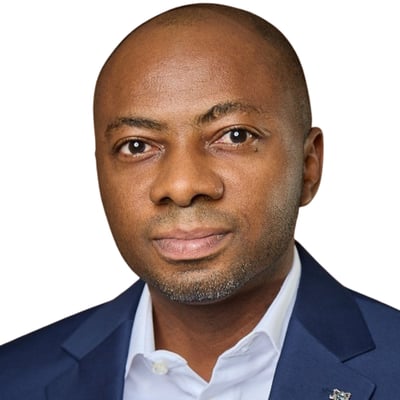
Robert Oduro
Chief Executive Officer
iSmart Ghana
Robert Oduro is a seasoned business leader and entrepreneur with over two decades of experience spanning telecommunications, digital financial services, and energy across West Africa and beyond. He is the Managing Director of iSmart International Ghana Limited, a licensed fintech and VAS company delivering digital value services to businesses, institutions, and consumers across Ghana and expanding African markets, and Founding Partner of Gye-Nyame Offshore Services, an energy brokerage firm with a track record of structuring complex agreements across multiple governments and industries.
Robert built his career from the ground up, progressing through commercial and sales leadership roles at Airtel Ghana and Alcatel, where he served as Country Manager for Ghana, Nigeria, Liberia, and Sierra Leone, before stepping into executive leadership. His career is defined by a consistent ability to enter new markets, build high-performing teams, and deliver measurable commercial results in complex, fast-moving environments.
A graduate of the Ghana Institute of Management and Public Administration, where he earned an MBA in Marketing, and a holder of a Bachelor of Arts in Political Science and Information Studies from the University of Ghana, Robert brings both strategic depth and on-the-ground operational experience to every platform he occupies. He is an alumnus of the Oxford Strategic Leadership Programme at Saïd Business School, University of Oxford.
Robert is driven by a singular conviction: that African-built institutions, anchored in integrity and powered by technology, are the foundation of the continent's next chapter.
Speaking at the summit
-
1:30–3:00pmMon 16 NovRoundtableOpen
Chamkar - The Proving Ground
Who Builds the Future? Talent and Capability for the Next Financial System
About this session
Financial sovereignty depends on more than owning infrastructure. Countries also need people capable of designing, operating, regulating and securing it. Across emerging markets, technical specialists often move toward larger financial and technology hubs, while regulators compete with private firms for expertise in fields that are changing rapidly. The challenge becomes even greater when systems begin connecting across jurisdictions and require professionals who understand multiple regulatory, technical and market environments. The roundtable asks which capabilities a country cannot afford to outsource permanently, how regulators and financial institutions can retain scarce technical talent, and which partnerships between central banks, universities and industry have the potential to build that capability at scale.

